Research Round-Up
300 Studies Link This Neurotoxic Pesticide to Multi-Organ Damage, Chronic Disease - Why is it Still “Under Review”?

A new review of nearly 300 studies found the pesticide, chlorpyrifos, may damage the brain, hormones, liver, gut microbiome, muscles, reproductive organs and bones. Studies also link chlorpyrifos to DNA damage that may increase the risk of chronic disease.
Chlorpyrifos use has been under review in Australia since 2024 with no current timeline as to when it may be pulled from the market.
The studies once again highlight the influence of industry over health and the need to become more mindful of where we source food for ourselves and our families.
Feeling inspired to grow your own? Check out our friends at The Healthy Patch - we are not affiliates; we just love their commitment to whole real food.
Increased Link to Skin Cancers from Sunscreen Use

“A 2024 study of over 470,000 people found that frequent sunscreen users had 292% higher rates of melanoma than those who rarely or never used it. Skin cancer rates have been climbing steadily since the mid-1970s, precisely when high-SPF chemical sunscreens went mainstream.
An unnamed former formulation chemist at a major sunscreen company says the internal absorption data existed years before it became public, and the decision not to switch to mineral alternatives was purely financial.
Chemical formulations are cheap to produce and the margins are huge. Meanwhile, four of the most common UV-filtering chemicals were found in 2019 to enter the bloodstream after a single day of use at concentrations exceeding the FDA's own safety threshold, and the FDA has let every product stay on the shelf.”
Independent journalists Chelle Wards and Tracy Beanz trace how we got here, what's actually being blocked, and why 15 minutes of midday sun does something no supplement can replicate.
From Riviera Tan to Regulatory Limbo - How Sunscreen Became Big Pharmas Favourite Cream
Breaking: Honeybee Venom Destroys 100% of Breast Cancer Cells in Less Than 60 Min
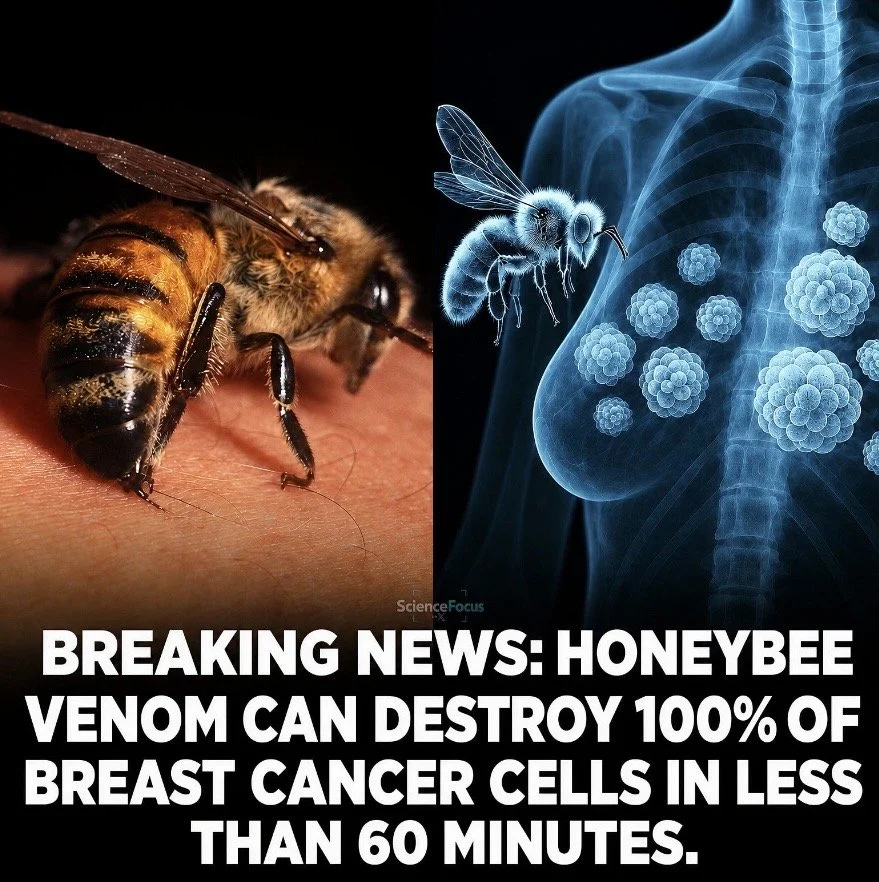
A tiny bee just did what chemotherapy couldn't.
Scientists in Australia discovered that honeybee venom can wipe out 100% of aggressive breast cancer cells in under 60 minutes.
And the healthy cells around them? Barely touched.
The breakthrough came from Dr. Ciara Duffy and her team at the Harry Perkins Institute of Medical Research, working alongside the University of Western Australia.
They tested venom drawn from 312 honeybees and bumblebees across Australia, Ireland, and England.
The target: triple-negative breast cancer and HER2-enriched breast cancer. Two of the deadliest, most stubborn forms of the disease.
The weapon: melittin. The same tiny peptide that makes a bee sting burn.
At one specific dose, melittin tore through cancer cell membranes completely within an hour. Within just 20 minutes, it shut down the chemical signals cancer cells need to grow and multiply.
Bumblebee venom, which lacks melittin, did nothing. Zero effect, even at high concentrations.
Scientists then recreated melittin synthetically in the lab and got almost identical results, meaning no bees need to be harmed to develop the therapy.
Published in the peer-reviewed journal npj Precision Oncology, the findings are still early-stage. Human trials haven't happened yet.
But one thing is clear.
Nature has been hiding answers in plain sight all along, sometimes inside the smallest creatures on Earth.
Source; https://perkins.org.au/honeybee-venom-kills-breast-cancer-cells/ , Harry Perkins Institute of Medical Research / npj Precision Oncology (Dr. Ciara Duffy et al.)
The latest health research news from around the world, compiled by Lead Instructor and Program Director Leanne Scott, FNTP.