
Nourishment, rest, warmth and support: what a mother actually needs after birth, and how the people around her can give it.
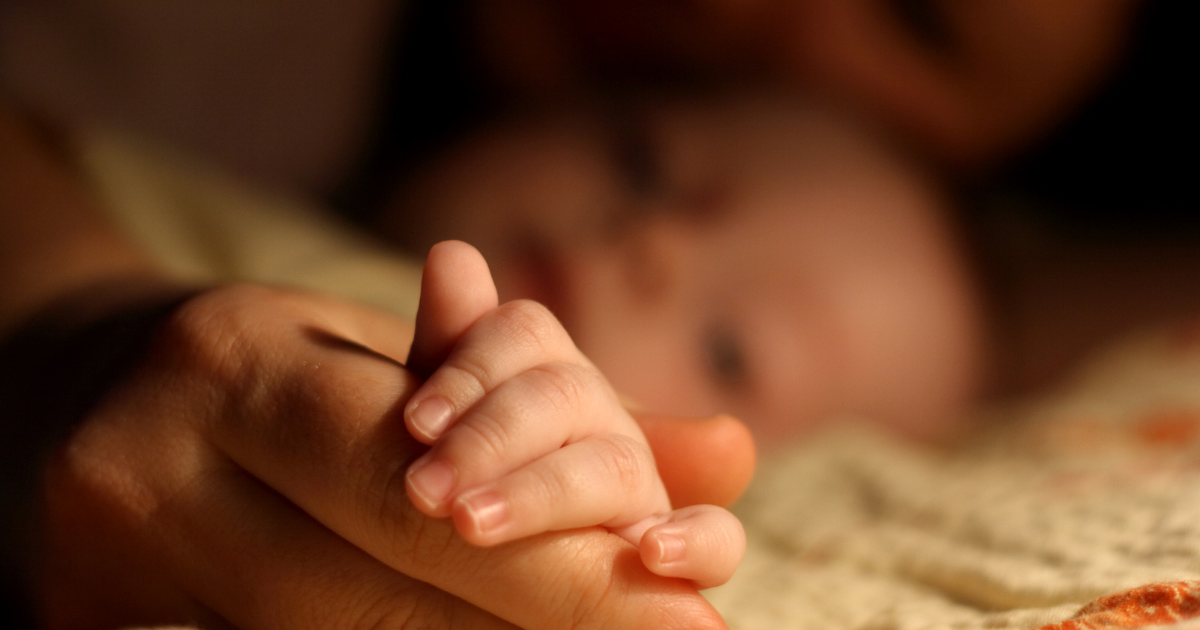
A new mother needs four things to recover well: nourishment, rest, warmth and support. None of them are complicated, and almost all of them can be given by the people who love her.
This article is for anyone with a new mother in their life. Partners, grandparents, sisters, friends, neighbours. You don't need any training to make a real difference to how she heals. You just need to understand what her body and mind are going through, and what kind of help actually helps.
Birth is a threshold, not a medical event
Throughout most of human history, the weeks after birth were treated as a rite of passage. In nearly every culture we have records of, a new mother was fed specific warming foods, kept warm, massaged, and surrounded by people whose whole job was to look after her. Often for 40 days or more.
That wasn't indulgence. It was recognition that something enormous had just happened to her, physically and emotionally, and that she needed to be held through it.
Today we have mostly replaced that with "bouncing back". Independence has become the marker of doing well. Partners are often back at work within days, and a single six-week check-up is the sum of most postpartum medical care. In the gap left behind, many mothers end up depleted and isolated, and are then told their exhaustion is normal.
The good news is that the heart of traditional postpartum care is simple enough for any family to bring back. It rests on four things.

Nourishment: warm, cooked and nutrient dense
After birth, a mother's digestion is tired. Labour pulls the body's resources towards birth itself, gut movement slows, and the hormones that shaped pregnancy drop away fast. Ayurveda describes this as the digestive fire going out, and it's a useful picture.
This is why a green smoothie and a big salad, however healthy they look, aren't the best gift. Raw, cold food asks a depleted body to do work it doesn't have the capacity for right now. What rebuilds her is food that is already half-digested by slow cooking.
Good foods to bring or cook for her:
Bone broths and soups, ideally in a thermos so she can sip through the day
Slow-cooked stews, casseroles and curries with well-cooked meat
Cooked root vegetables: pumpkin, sweet potato, carrot, beetroot
Congee, porridge and soaked or well-cooked grains
Eggs, cooked any way she likes them
Good fats: butter, ghee, the fat on meat, full-fat dairy if it suits her
Gently spiced dishes with ginger, cinnamon, cumin and turmeric
Warm drinks: herbal teas, warm milk drinks, broth
Best kept for later: iced drinks, smoothies, salads, raw vegetables and anything straight from the fridge.
Rich food matters for more than recovery. If she is breastfeeding, she is feeding two people through one body. Healthy fats are building blocks for a baby's growing brain and nervous system, and what she eats shapes the quality of her milk.
A few practical touches make food far more useful. Bring meals in containers she doesn't need to return. Label them with what's inside and how to reheat. Make one-handed food she can eat while feeding: muffins, boiled eggs, bliss balls, a mug of soup. And if you're setting up a meal roster with friends, check what she actually feels like eating.
Rest: the healing doesn't happen without it
Rest after birth isn't a luxury. It's when the healing actually happens.
In the first day after birth, oestrogen and progesterone fall harder and faster than at any other point in a woman's life. Her body has just doubled its blood volume, grown a whole new organ in the placenta and birthed a baby. Now it has to repair a wound inside the uterus, bring the pelvis back together and settle a nervous system that has been through something huge. All of that takes energy, and energy comes from rest.
Physically, everything in her is saying go inward, go slow, be still. A "bounce back" culture tells her the opposite, and many women feel they have to earn the right to lie down.
Traditional cultures protected this window fiercely. Many talk about the first 40 days, sometimes called the golden month. A common guide is:
Week one: in bed
Week two: on the bed
Week three: around the bed
It sounds extreme to modern ears, but women who rest deeply early on often recover faster and more fully than those who push through. Traditional Chinese Medicine goes as far as saying a well-cared-for postpartum period can reset a woman's health for the rest of her life.
Rest is also emotional. A mother who is sleep-deprived, in pain and constantly "on" has very little left to bond, feed or feel like herself. When the people around her protect her rest, they protect her mood too.
How you can help her rest:
Tell her plainly that she doesn't need to host you, tidy up or get dressed
Keep visits short unless she asks you to stay
Take the jobs that keep her on her feet, so she can stay horizontal
Gently hold the door on visitors if she is tired, and be the one to say "not today"
Encourage her to sleep when the baby sleeps, and make that possible by handling everything else

Warmth: for the body and the heart
Keeping a new mother warm is one of the oldest and simplest forms of postpartum care, and one of the most overlooked.
In Traditional Chinese Medicine, the postpartum body is described as "open". The pelvis has opened to let a baby through, and in the weeks that follow it slowly closes again. While it's open, a mother is seen as especially vulnerable to cold: cold air, cold food, cold drinks, cold floors. Cold is thought to cause stagnation, which can show up as slower healing, more cramping and pain, and low energy. Warmth does the opposite. It keeps blood moving and supports digestion and recovery at the exact moment she has the least reserve to regulate her own temperature.
You don't need to follow any particular tradition to see the sense in this. A depleted, blood-poor body that has just lost a lot of fluid does better when it's kept warm.
Practical warmth:
Socks or slippers, always, even in summer
A warm drink in her hand rather than iced water
Warm meals rather than cold ones
A wheat bag or hot water bottle for her belly and lower back
Keeping her room cosy and free of draughts or blasting air-con
Staying in, wrapped up and resting, rather than rushing back out
Warmth is emotional as well. The same body that heals better when it's physically warm also settles more easily when it feels safe, wanted and cared for. A warm voice, a gentle hand on her shoulder, a home that feels calm. These aren't small things to a mother whose whole nervous system is learning a new way of being.
Support: she was never meant to do this alone
Support is the pillar that holds the other three up. Without it, nourishment, rest and warmth are almost impossible for a new mother to give herself.
Research on loneliness has found that social isolation is as harmful to physical health as smoking 15 cigarettes a day. Connection isn't a soft extra. It's as essential to wellbeing as food and sleep, and it matters most in the weeks after birth.
What's happening in her brain
Pregnancy and birth reshape a mother's brain. Studies show measurable changes in grey matter, and this isn't damage. It's the brain pruning and reorganising itself around caring for a baby, much like it does in adolescence. Areas tied to emotion, attention and reading other people's needs become more finely tuned.
This transformation has a name: matrescence, the birth of a mother. It's why she may feel foggy, sensitive, more instinctive and less like her old self. Her brain is doing exactly what it's meant to do.
Tears are part of this too. Prolactin, the hormone that drives milk production, also makes new mothers cry more easily, and crying is one of the ways the body clears stress. When she cries, she doesn't need to be cheered up or fixed. She needs someone to sit with her.
What support looks like
The most helpful support is practical, steady and centred on her. It means looking after the mother so she can look after her baby.
Bring food. Warm, ready-to-eat meals, snacks and drinks.
Do the jobs. Hang out the washing, fold and put away laundry, run the dishwasher, wipe the kitchen, take out the bins, change the sheets.
Look after the older children. Take them to the park, play with them, read with them, do the school run. This is one of the greatest gifts you can give.
Run the errands. Groceries, the pharmacy, the post office.
Look after the animals and the garden if she has them.
Bring her things. A glass of water while she feeds, a fresh cup of tea, a pillow, a blanket.
Listen. Let her tell her birth story as many times as she needs to.
What support isn't
Support isn't arriving to hold the baby.
It's very natural to want those newborn cuddles, but a mother and baby in the early weeks need to be together. Skin-to-skin contact and closeness raise oxytocin, the hormone behind bonding, milk letdown and her own sense of calm. Her body is wired to keep her baby close right now, and passing the baby around while she does the dishes is the opposite of what she needs.
If she asks you to hold the baby so she can shower, eat or sleep, that's wonderful. Just let it be her choice, and hand the baby back when she's ready.
Instead of: "Let me take the baby so you can get things done"
Try: "Stay with the baby, I'll get things done"
Instead of: "Let me know if you need anything"
Try: "I'm bringing dinner Thursday. Any foods you don't feel like?"
Instead of: "At least the baby is healthy"
Try: "That sounds so hard. I'm here."
Instead of: "You need to get out of the house"
Try: "Stay in and rest. I'll bring the outside world to you."
Instead of: Offering advice on how to parent
Try: Asking how she's feeling, then listening
Being a steady presence
Some of the most powerful support doesn't involve doing anything at all. It's being willing to sit with her, without fixing or rushing her, and say: I see you, I'm here, you are not doing this alone.
If she is struggling, take it seriously. Feeling low, teary and overwhelmed is very common, and is often a sane response to exhaustion and isolation. But if she seems persistently hopeless, can't sleep even when given the chance, or seems confused or not like herself in a way that worries you, help her reach her GP, midwife or a perinatal mental health service straight away.
It takes a village, and you can be part of it
A mother's health sits at the centre of her family's health. When she is nourished, rested, warm and supported, she has what she needs to care for her baby and herself, and the whole family feels it.
You don't need to be an expert to give her that. You need to show up with a warm meal, fold the washing, take the toddler to the park, and leave the baby in her arms. You need to tell her she can rest without earning it, and mean it.
The weeks after birth pass quickly, but how a mother is held through them can stay with her for life.
Article by Katy Smith, Roots of Wellness

